
Winter Solar: What to Expect From Your Panels After a Snowstorm
When the days get short and the snow starts falling, many New England homeowners notice their solar numbers change. That’s normal, and it’s no reason to worry. Here’s what’s actually happening, what snow does (and doesn’t do) to your system, and how to keep things running smoothly all winter.
Why Production Dips in Winter
Solar panels generate power from sunlight, and winter simply offers less. Days are shorter, the sun sits lower in the sky, and cloudy weather is more frequent. Your system is working as designed; it just has less light to work with.
Cold weather itself isn’t the problem. Panels actually run more efficiently in cooler temperatures. A bright, cold January day can produce surprisingly well.
If you have net metering, summer overproduction typically helps offset the leaner winter months, so judge your system over the full year rather than month to month.
What Snow Really Does to Solar Panels
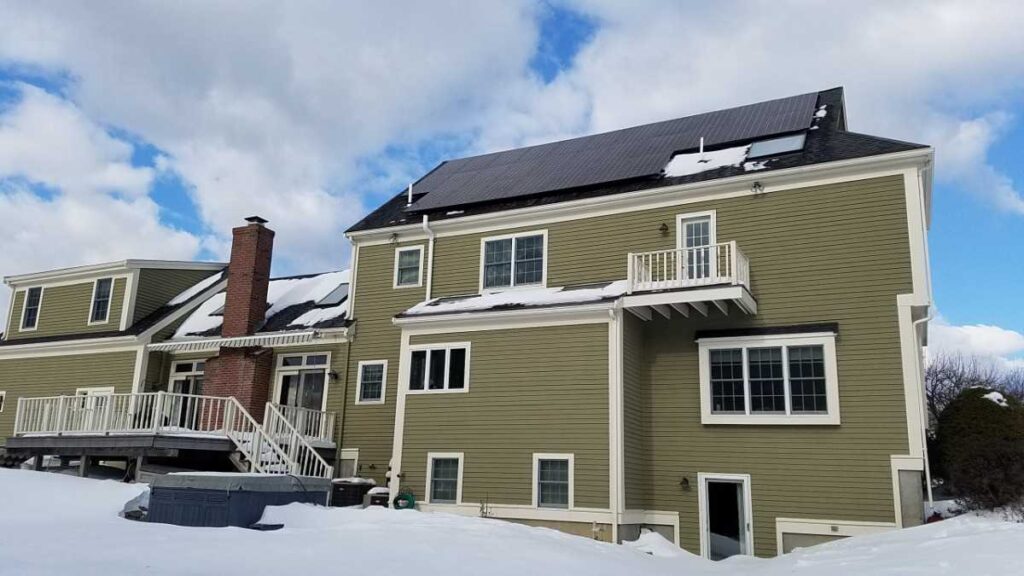
A layer of snow blocks sunlight, so a fully covered array produces little or nothing until it clears. The good news is that panels are smooth, dark, and tilted, so snow often slides off on its own, especially once the sun comes out. Dark panels warm up quickly and help melt the snow from underneath.
Snow becomes a bigger issue when:
- Panels are mounted at a low tilt, or are ground-mounted close to the ground
- Heavy, wet snow or ice builds up after a major storm
- Drifting or shading from nearby roofs and trees keeps the bottom edge covered
In most cases, a brief pause in production is all you’ll see.

Winter Tips for Homeowners
- Check your monitoring app. Learn what a normal winter day looks like so you can spot real problems fast. A sudden drop to zero on a sunny, snow-free day is worth a call.
- Stay off the roof (and especially the panels). Climbing on a snowy or icy roof is dangerous, and it’s not worth the risk for a day or two of production.
- Don’t use rakes, shovels, or hot water on panels. Metal tools can scratch the glass and coatings, and sudden temperature changes can damage panels. A scratched panel can cost you far more than the snow ever will.
- Keep the ground area clear. For ground-mounted systems, clear a safe path to the array and keep snow from piling up against the lower edge.
- Check for ice and falling snow hazards. Sliding snow can come off the roof all at once, so keep an eye on walkways, driveways, and gutters below the array. Consider adding snowguards above high-traffic areas to divert falling snow.
- Mind your warranty. Improper snow removal can affect coverage, so use a professional when you can.
- Schedule a spring check-up. After a long winter, a quick inspection can catch loose wiring, debris, or shading changes before the high-production season.
Things to Consider Before Clearing Snow
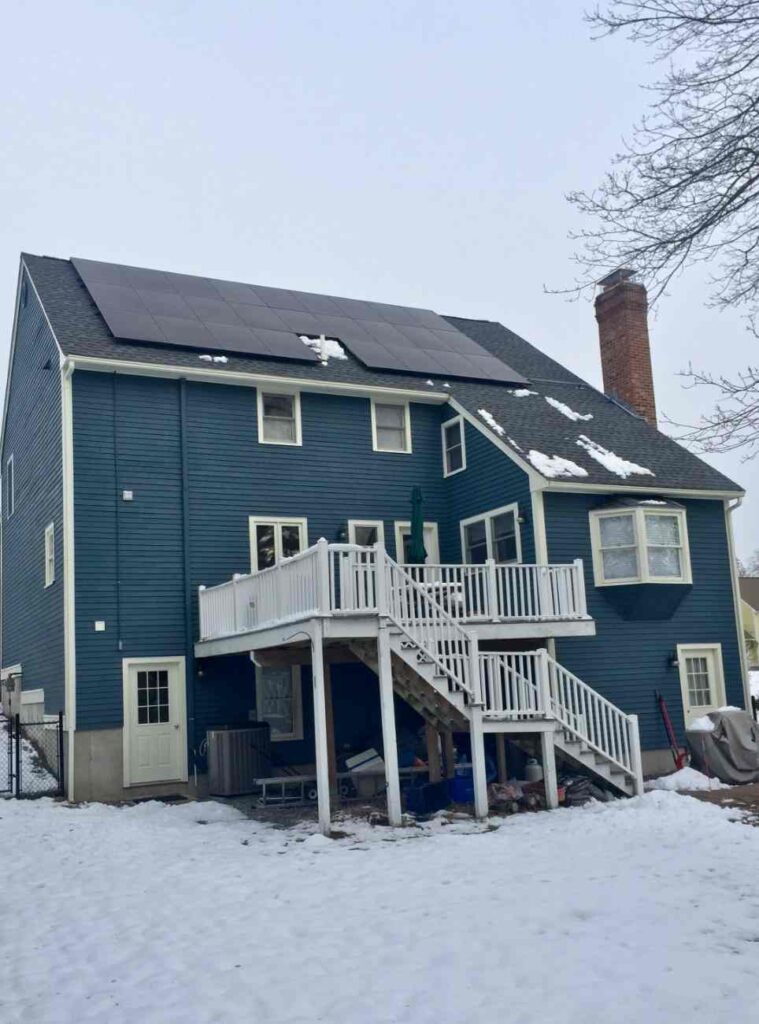
When a big storm buries your array, it’s tempting to grab a broom and fix it yourself. Before you do, here’s what to keep in mind. A little planning goes a long way toward protecting your panels, your warranty, and your safety.
Do:
- Hire a qualified solar professional. Look for a company with real experience servicing solar systems, not just general roof or snow work. Ask how they clear snow without harming the panels, and whether their methods protect your warranty.
- Reach out to a provider before the snow arrives. Contact a company early in the season so you know who to call when a storm hits. Crews book up fast after big storms.
- Ask about insurance. Make sure anyone working on your roof or array is fully insured.
- Let light snow melt on its own. In most cases, a sunny day does the work for free.
- Consider scheduling annual maintenance. A quick inspection helps catch loose wiring, debris, and shading changes before spring.
Don’t:
- Climb onto a snowy or icy roof. It’s dangerous and not worth a day or two of production.
- Use rakes, shovels, metal tools, or hot water on your panels. They can scratch the glass and coatings, and sudden temperature changes can cause damage.
- Wait until the storm is over to start looking. The best time to find a provider is before you need one.
- Hire a handyman without solar experience. Improper snow removal can damage panels and may affect your coverage.
- Assume every inch of snow needs to be cleared. A professional can tell you when it’s worth it and when it’s better to wait.
Ready to Get Ahead of the Next Storm?
Not sure whether your system needs help? We’re happy to look at your numbers and tell you whether it’s a normal winter dip or something worth checking. Don’t wait until the snow is piled up. Call us at 800-223-1462 ext. 4 or contact us online to schedule a system inspection before winter is in full swing.
URL: https://www.powerhrg.com/about/news/how-to/do-solar-panels-work-in-the-winter/
URL: https://www.energysage.com/solar/solar-panels-in-winter-weather-snow-affect-power-production/